

Dental Bridges – Lakewood, CO
Bridging the Gaps Between Your Pearly Whites
Are you struggling with missing one or several teeth in a row? If so, then you know how tooth loss can negatively impact your oral health and quality of life. Missing pearly whites can make everyday tasks difficult, such as eating comfortably, talking clearly, and smiling confidently. Fortunately, Dr. Carole Emanuel can effectively close gaps between your teeth with dental bridges. These sturdy restorations can rebuild your bite and smile, allowing you fully enjoy your pearly whites again for many years to come. Keep reading or give us a call today if you wish to renew your grin with a dental bridge in Lakewood!
Why Choose Carole Emanuel, DDS for Dental Bridges?
- Durable, Lifelike & Long-Lasting Restorations
- Completely Customized Treatment For Each Patient
- Accepts Dental Insurance & Offers Alternative Financing
What Is a Dental Bridge?
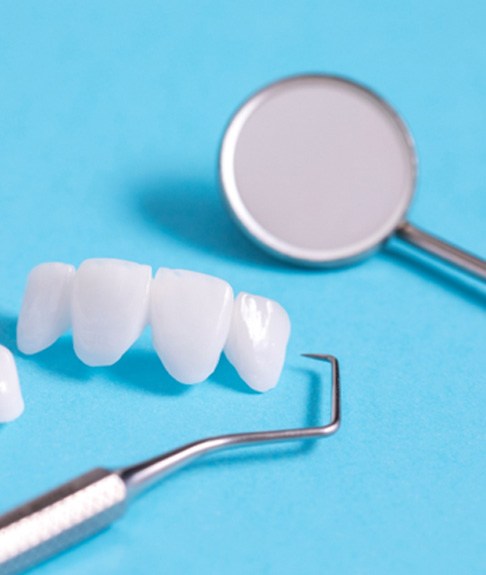
A dental bridge is a type of restoration that can replace one or more consecutively teeth that are missing completely. It typically consists of replacement teeth that are connected to two crowns that are designed to be fitted to the healthy teeth on either side of the gap. Your dental bridge will usually be made out of porcelain-fused-to-metal, providing a durable and natural-looking solution that will blend flawlessly with the rest of your smile. With proper care, your restoration should last you 10 years or more before needing to be replaced.
Types of Dental Bridges
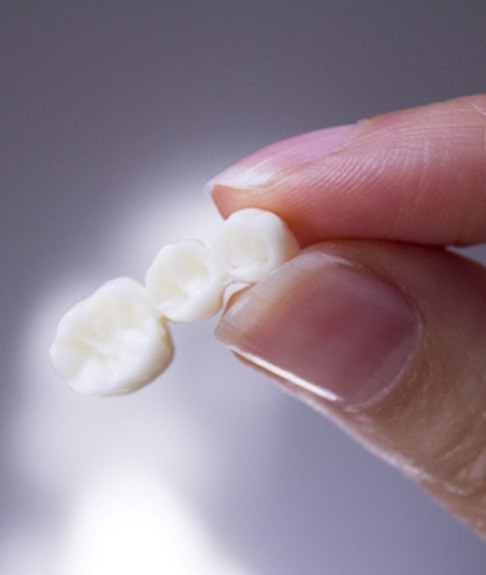
Dr. Emanuel is happy to provide two kinds of dental bridges: traditional and implant-supported ones. Here’s what you can expect from each tooth-replacement solution:
Traditional Dental Bridge
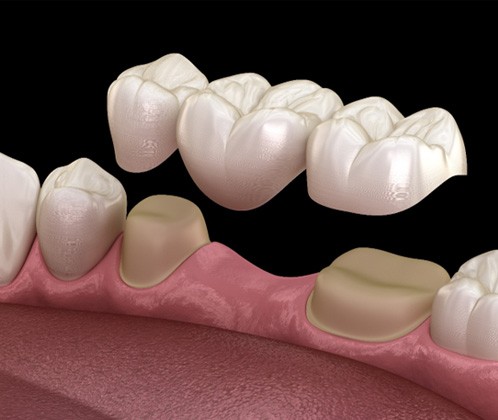
If you’re missing one or several teeth in a row, a traditional dental bridge can successfully fill the gaps in your smile. To do this, Dr. Emanuel will need to remove a tiny portion of your enamel to make room for the crowns that will be fitted on top of the healthy adjacent teeth. After preparing the abutment teeth, your restoration will be cemented in place so that it remains in your mouth for many years to come.
Implant Bridge
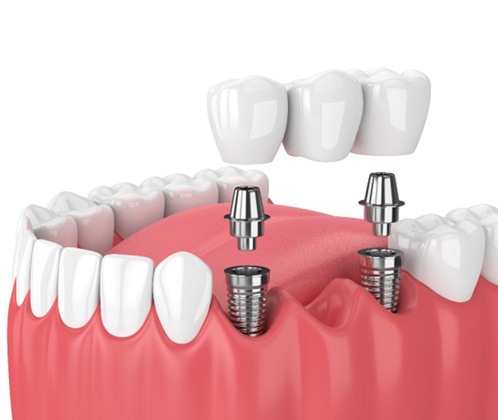
Unlike traditional dental bridges which rely on healthy remaining pearly whites for support, an implant bridge will be directly anchored to titanium posts embedded into your jawbone. Due to this level of stability, your restoration will have a much longer lifespan, feel more natural, and return more of your biting power in the long run. You’ll be able to fully enjoy all your favorite meals without any dietary restrictions.
The Benefits of Getting a Dental Bridge

With a dental bridge, you’ll be able to enjoy the following advantages to your oral health:
- A completely personalized treatment plan
- Improved natural biting force
- Prevents misalignment issues due to dental drifting
- A durable and natural-looking restoration
- Can last 10 years or more with the right care (or several decades with implant bridges)
Dental Bridge FAQs
Is Getting a Dental Bridge Painful?
Placing a traditional dental bridge means removing a small amount of enamel from the teeth that will support it. To keep you as comfortable as possible during this part of the process, we will numb your mouth with a local anesthetic. We can also administer nitrous oxide sedation if you’re particularly nervous or anxious.
Once your teeth have been prepared for a dental bridge, they may be more sensitive than normal. The discomfort should fade away on its own after a while, and you should be able to manage it until then with the help of an over-the-counter pain reliever. If it seems like the discomfort is growing worse, reach out to our team right away.
Can Dental Bridges Be Whitened?
Our porcelain-fused-to-metal dental bridges are made to look as lifelike as possible. However, the simple fact is that they cannot be whitened in the same manner as natural teeth since they do not have any pores for the bleaching gel to penetrate. As such, if you plan on having teeth whitening performed in the near future, it may be a good idea to undergo the procedure before you receive your dental bridge. This will allow us to design your prosthesis so that it matches the rest of your newly brightened smile.
Can Dental Bridges Get Cavities?
No, dental bridges are not made of enamel and therefore are not at risk of developing cavities. That being said, the teeth supporting the bridge could still suffer from decay if harmful bacteria make their way underneath the prosthesis. As such, it’s important to give your dental bridge the same attention as the rest of your smile when it comes to oral hygiene. Remember to brush your dental bridge thoroughly with a soft-bristled toothbrush, and be sure to clean the area underneath it with an interdental brush or a floss threader.
Are Dental Bridges Covered by Insurance?
Many dental insurance plans do indeed offer some level of coverage for dental bridges. You can often expect your insurance provider to pay around half the cost of the procedure, but the exact amount can vary. Bear in mind that factors such as your deductible or your annual maximum could affect the amount that the insurance company is willing to pay for a dental bridge or any other type of treatment.
Can You Take a Dental Bridge Out?
No, a dental bridge is designed to stay anchored to your natural teeth or to a pair of dental implants. Under normal circumstances, you should not be able to take it out on your own. Only your dentist will be able to remove it if necessary.
You may have heard the term “removable bridges,” but this is actually another name for partial dentures. Unlike dental bridges, partial dentures are made so that you can take them out of your mouth at any time.