

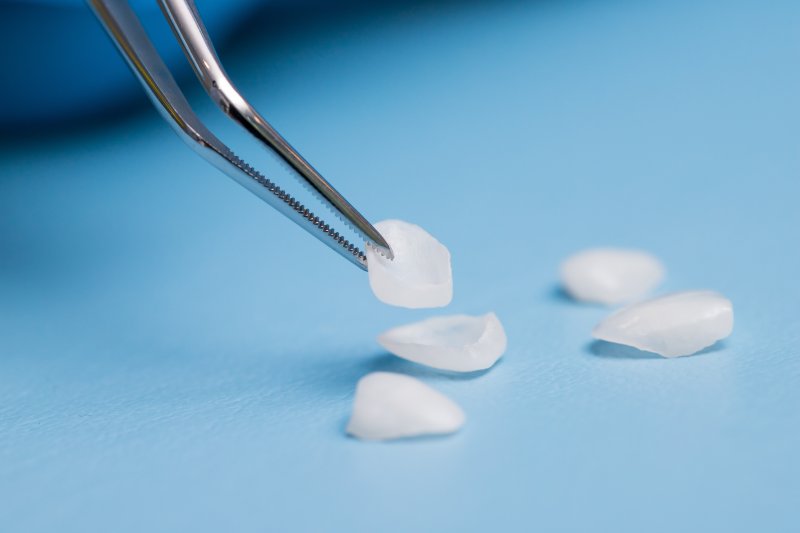
Based on what you’ve heard, veneer treatment may sound a bit “intense.” The process is certainly more invasive than what’s involved for other cosmetic dental options. All that said, it’s only natural to wonder: Will veneers make your teeth sensitive? This question matters and deserves careful answering, so your Lakewood dentist is here to address it. Simply keep reading to learn about veneers, their placement, and whether they’ll make your teeth feel achy or sore.
Getting Veneers Involves “Prep”
Before we get to the sensitivity issue, you’ll need to know how veneers are placed. What follows won’t make sense to you otherwise.
Dentists must “prepare” your teeth before you get veneers. To do so, they’ll remove bits of your enamel, ensuring your smile has room for the final restorations. The dental team will then make impressions of the “prepped” teeth and send them to a dental lab. Lab workers will use said impressions to craft your veneers, typically over several weeks or so. (You’ll wear temporary shells in the meantime.)
A dentist will only place your veneers at a second, follow-up visit. At that time, they’ll set your shells over the prepared teeth and make last-minute changes to ensure the results look good.
Will Veneers Make Your Teeth Sensitive?
Given their placement process, veneers can sometimes make teeth sensitive. You should thus be cautious as you head into treatment.
Any sensitivity typically stems from the “prep” work. Since treatment removes some of your enamel, it may expose bits of your smile’s dentin – the tooth layer containing sensitive nerves. This region is easily stimulated by hot and cold temperatures, so it can send pain signals to your brain and cause aches.
Thankfully, such sensitivity is usually short-lived. Veneers essentially “replace” lost enamel and thus protect against extreme temperatures – the very hot, the very cold, etc. You can expect any treatment-related soreness to fade within a week or two of placement.
Preventing Post-Veneer Sensitivity
Right after veneer placement, you can take several steps to prevent or reduce sensitivity. These include the following:
- Take Pain Relievers – As you might already suspect, you could manage your sensitivity with over-the-counter pain relievers.
- Rinse with Saltwater – It’s possible to reduce post-treatment swelling by rinsing with warm saltwater. In doing so, you’d also balance your mouth’s pH levels.
- Adjust Your Meals – To the extent you can, try to avoid very hot or cold foods and drinks. Some examples include coffee, ice cream, etc.
While veneers don’t always make teeth sensitive, it never hurts to play it safe. Consult your dentist before treatment to learn your risk for post-care sensitivity.
About the Author
Dr. Carole Emanuel is a dentist in Lakewood, CO, having earned her DDS from the Indiana University School of Dentistry. She has advanced expertise in preventive, cosmetic, and restorative dental work, as well as emergency oral procedures. That means you can trust her for any and all smile help, no matter your age or background. Today, Dr. Emanuel practices at her self-titled clinic and is reachable on her website and by phone at (303)-986-0090.